
The Njord Autonomous Ship Challenge has reached a new milestone in 2026, bringing together 20 student teams and around 140 participants from nine countries to compete in autonomous maritime technology. India’s Aritra team took the top spot in a closely contested competition, followed by Mys Yavuz from Turkey and AGH Solar Boat from Poland.
Teams from Canada, Japan, India, Spain, Scotland, Poland, Turkey and other countries travelled to Norway to test their autonomous vessels in a series of demanding challenges. According to Sutha Rajasingham, Head of Competition Planning for Njord Autonomous Ship Challenge 2026, interest was so high that the organisers had to cap the number of participating teams at 20.
“This is the biggest Njord Challenge ever,” Rajasingham says.
The number of teams has doubled from last year, when 10 teams took part. Participation has also roughly doubled, making the 2026 competition the largest edition to date.
.jpg?width=6000&height=4000&name=Njord%20Challenge%202026%20Foto%20Lars%20Bugge%20Aarset%20Fremtidens%20Industri%20(107).jpg) Sutha Rajasingham, Head of Competition Planning for Njord Autonomous Ship Challenge. Photo: Lars Bugge Aarset/Fremtidens Industri
Sutha Rajasingham, Head of Competition Planning for Njord Autonomous Ship Challenge. Photo: Lars Bugge Aarset/Fremtidens Industri
Testing autonomous vessels in realistic scenarios
The competition is designed to test both the individual capabilities of the vessels and the teams’ ability to integrate different autonomous systems into one functioning platform.
The challenges are organised around three main areas and four exercises: pathfinding and manoeuvring, docking, and collision avoidance.
In the pathfinding exercise, the vessels must detect buoys and follow a predefined route using GPS waypoints. The docking exercises test two different approaches: conventional docking, similar to parking a vessel alongside a quay, and parallel docking, where the vessel must manoeuvre into position with its long side facing the dock.
.jpg?width=6000&height=4000&name=Njord%20Challenge%202026%20Foto%20Lars%20Bugge%20Aarset%20Fremtidens%20Industri%20(119).jpg) Photo: Lars Bugge Aarset/Fremtidens Industri
Photo: Lars Bugge Aarset/Fremtidens Industri
The collision-avoidance exercise introduces another autonomous vessel into the scenario. The vessel is remotely monitored and controlled from NTNU’s Shore Control Lab, approximately one kilometre from the competition area. This provides the competing teams with a realistic moving obstacle that they must detect and avoid.
The teams are not told in advance exactly what they will encounter.
.jpg?width=6000&height=4000&name=Njord%20Challenge%202026%20Foto%20Lars%20Bugge%20Aarset%20Fremtidens%20Industri%20(133).jpg) The collision-avoidance is remotely monitored and controlled from NTNU’s Shore Control LabPhoto: Lars Bugge Aarset/Fremtidens Industri
The collision-avoidance is remotely monitored and controlled from NTNU’s Shore Control LabPhoto: Lars Bugge Aarset/Fremtidens Industri
The element of surprise is deliberate. It tests whether the teams have developed fully integrated autonomous systems capable of responding to situations they have not specifically rehearsed.
“It really tests whether they have a fully integrated system that can handle all the different exercises, rather than having separate solutions for each exercise,” Rajasingham explains.
.jpg?width=6000&height=4000&name=Njord%20Challenge%202026%20Foto%20Lars%20Bugge%20Aarset%20Fremtidens%20Industri%20(70).jpg) Photo: Lars Bugge Aarset/Fremtidens Industri
Photo: Lars Bugge Aarset/Fremtidens Industri
Competition drives collaboration
While the teams are competing for points, the event also creates an environment for collaboration and knowledge sharing.
Despite the increasingly close competition, teams openly share solutions, tools and experience with one another. Participants compare approaches and help each other solve technical challenges.
“There is a lot of fair play between the teams. They help each other with tools, look at each other’s solutions, and are very open about the solutions they have developed themselves,” says Rajasingham.
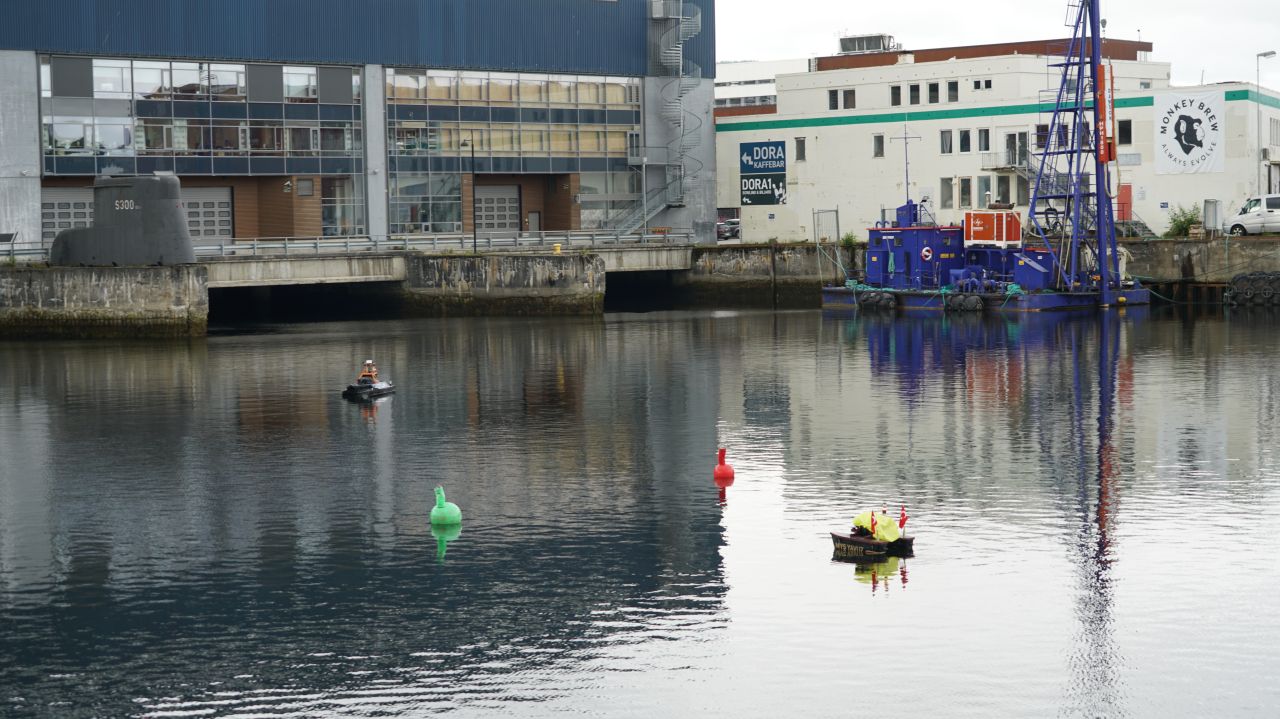 Photo: Anine Ødegaard/Njord NTNU
The competition also highlights the diversity of approaches to autonomous vessel design.
One team has developed a highly distinctive hull with a 3D-printed exterior, while another has experimented with a moving battery system designed to stabilise the vessel. The latter team consists of just two students and has only been working together for a year.
Several teams have also had to overcome significant technical and logistical challenges, underlining the importance of adaptability in autonomous systems development.
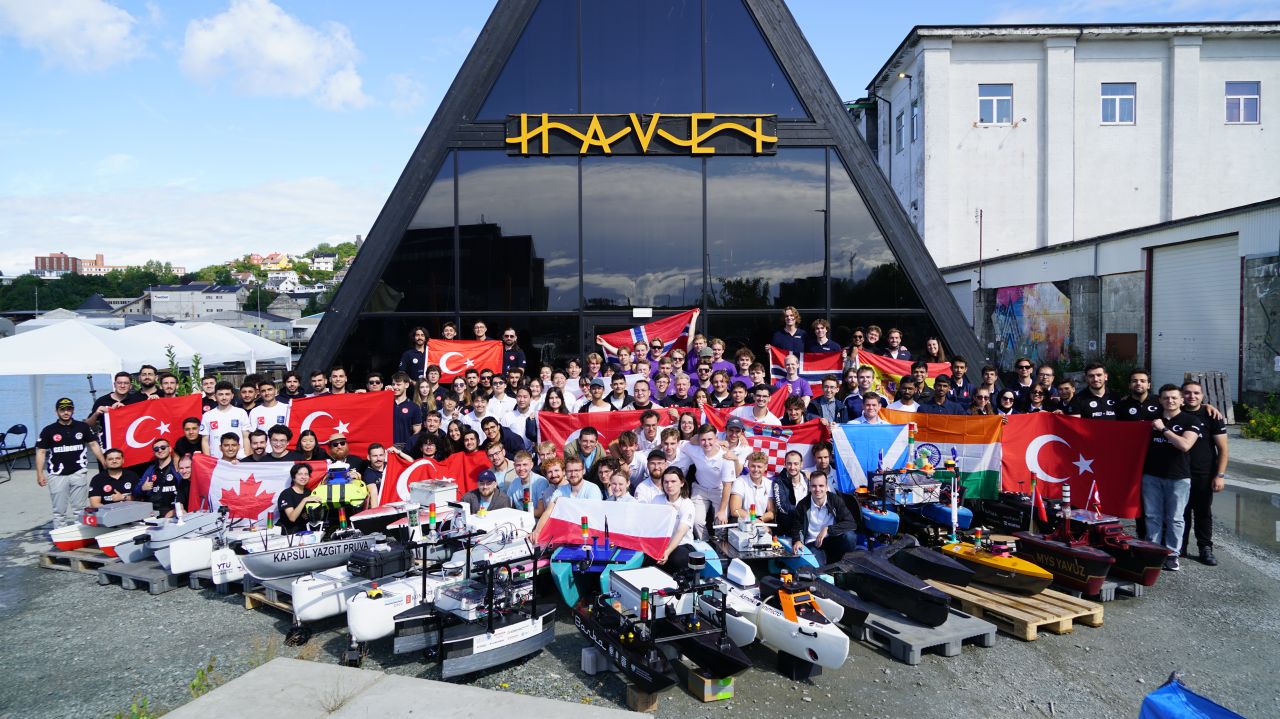 Photo: Anine Ødegaard/Njord NTNU
International competition, local talent
The 2026 competition was decided by very small margins, underlining the high level among this year’s teams.
The final top three were:
1. Aritra – India
2. Mys Yavuz – Turkey
3. AGH Solar Boat – Poland
The best-performing Norwegian team was Navier USN, which finished in fourth place.
The international field brings together different engineering approaches, technologies and experiences from across the world, creating a highly competitive environment.
For newer teams, the challenge provides an opportunity to benchmark their systems against teams with several years of competition experience.
.jpg?width=6000&height=4000&name=Njord%20Challenge%202026%20Foto%20Lars%20Bugge%20Aarset%20Fremtidens%20Industri%20(89).jpg) Photo: Lars Bugge Aarset/Fremtidens Industri
Photo: Lars Bugge Aarset/Fremtidens Industri
Preparing the next generation of maritime technology
For the organisers, the most important outcome is not simply determining who wins the competition.
Njord is intended to push students to explore what autonomous maritime systems can achieve, while giving them an opportunity to develop technologies that may have applications well beyond the competition.
“The most important thing is that we build an event that promotes autonomy and innovation, and pushes students to test the limits of what they can achieve,” Rajasingham says.
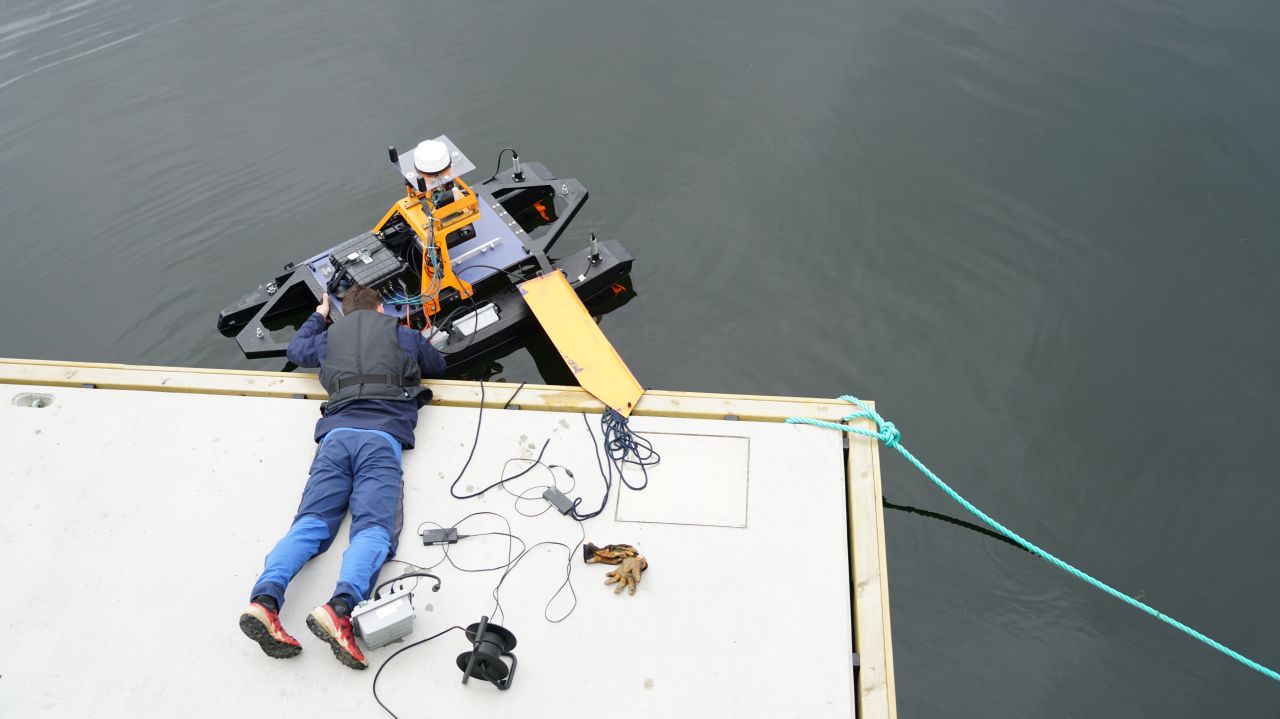 Photo: Anine Ødegaard/Njord NTNU
That ambition aligns closely with the wider development of autonomous maritime technology. Skills developed through the competition – from perception and navigation to sensor integration, control systems and collision avoidance – are increasingly relevant to the maritime industry.
And the competition provides students with an environment where they can test those systems on the water, under conditions where unexpected technical problems are inevitable.
.jpg?width=6000&height=4000&name=Njord%20Challenge%202026%20Foto%20Lars%20Bugge%20Aarset%20Fremtidens%20Industri%20(98).jpg) Photo: Lars Bugge Aarset/Fremtidens Industri
Photo: Lars Bugge Aarset/Fremtidens Industri
Adaptability is part of the challenge
Even the strongest teams encounter technical problems during the competition.
Having good hardware and a sophisticated autonomous system is only part of the equation. Teams must also be able to diagnose problems, adapt their systems and make decisions when something unexpected happens.
“That is probably one of the things that separates the teams – how well they manage to adapt,” Rajasingham says.
.jpg?width=6000&height=4000&name=Njord%20Challenge%202026%20Foto%20Lars%20Bugge%20Aarset%20Fremtidens%20Industri%20(101).jpg) Photo: Lars Bugge Aarset/Fremtidens Industri
Photo: Lars Bugge Aarset/Fremtidens Industri
The result is a competition that tests not only autonomous navigation, but also engineering judgement, system integration and problem-solving under pressure.
With 20 teams from nine countries and around 140 participants, Njord Autonomous Ship Challenge 2026 demonstrates the growing international interest in autonomous maritime technology – and the role student competitions can play in developing the people and technologies that will shape the maritime industry of the future.
The winners
.jpg?width=2048&height=1151&name=Njord%20Challenge%202026%20(3).jpg) Team Aritra form India. Photo: Anine Ødegaard/Njord NTNU
Team Aritra form India. Photo: Anine Ødegaard/Njord NTNU
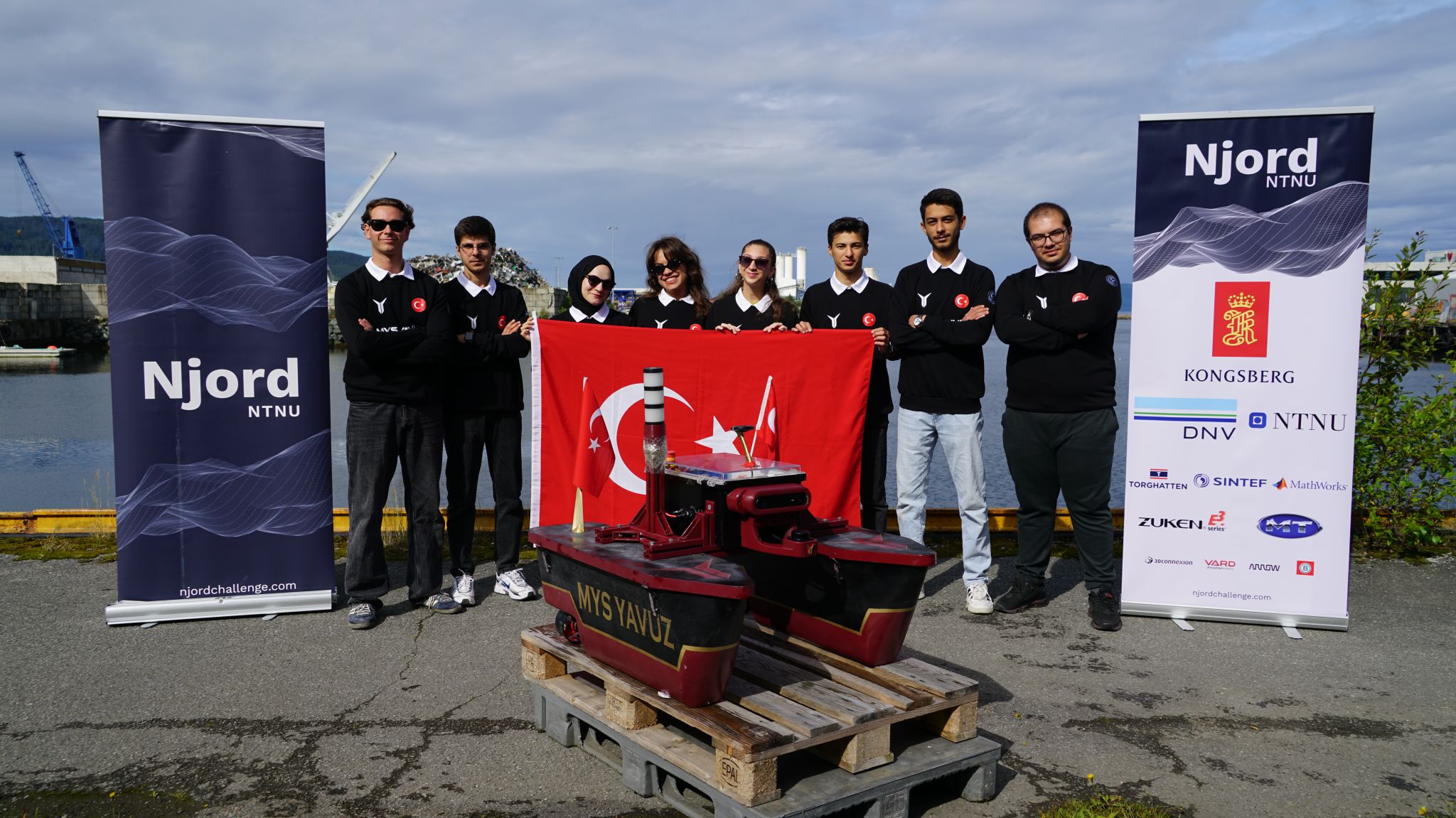 Mys Yavuz from Turkey. Photo: Anine Ødegaard/Njord NTNU
.jpg?width=2048&height=1151&name=Njord%20Challenge%202026%20(1).jpg) Team AGH from Poland. Photo: Anine Ødegaard/Njord NTNU
Team AGH from Poland. Photo: Anine Ødegaard/Njord NTNU
.jpg?width=2048&height=1151&name=Njord%20Challenge%202026%20(2).jpg) Best Norwegian team: Navier USN on forth place.. Photo: Anine Ødegaard/Njord NTNU
Best Norwegian team: Navier USN on forth place.. Photo: Anine Ødegaard/Njord NTNU